 Ultimate guide
Tips for Navigating Large Fan Conventions Like a Pro
Quick Summary
Tips for navigating large fan conventions start with planning before you arrive: pick two or three must-see panels, set up the official app, and budget for tickets, parking and fees. Build your schedule with buffer time, learn the floor map, and apply a quick test before joining any line.
- Pick two or three must-see panels and one or two guests before you leave home.
- Download the official convention app and turn on notifications for schedule changes.
- Leave a 30-minute buffer between commitments and assume queues will run longer than posted.
- Arrive 10-15 minutes before a posted signing time and use the last hour before close for quick purchases.
- Walk the perimeter aisles, which are usually 5-10 minutes faster than the crowded center.
Table of Contents
- Planning Before You Arrive
- How to Plan a Convention Schedule That Survives Contact With the Crowd
- What to Bring to a Comic Convention
- Reading the Convention Map and Getting Around Crowded Halls
- A Practical Crowd and Queue Strategy
- First Time Comic Con Tips for New Attendees
- Convention Survival Tips: Breaks, Sensory Overload, and Personal Limits
- Accessibility, Safety, and Meet-Up Plans for Large Events
- Booking Your Next Fan Event With FANBOYS
- Frequently Asked Questions
Planning before you arrive makes the difference between a convention that drains you and one you remember fondly, and these tips for navigating large fan conventions show you how to get that planning right. Large fan conventions can cover hundreds of thousands of square feet, host dozens of panels at once, and draw crowds that turn a simple walk across the hall into a half-hour trek.
Planning Before You Arrive
Before you leave home, decide what you actually want from the event. Pick two or three must-see panels, one or two guests you hope to meet, and a short list of exhibitors or artists you want to visit. That focus keeps you from wandering aimlessly through an exhibitor hall that can swallow an entire afternoon.
Getting the Official App and Schedule Set Up
Download the official convention app and sign in before the event week starts. Follow this step-by-step guide to finding local convention updates to keep track of schedule changes and news.
Save your priority panels to your calendar with a reminder 15 minutes before each one. Many large conventions use a separate queue system for popular panels, so check whether you need to line up early or register in advance.
Budget, Tickets, Parking, and Travel
Set a realistic budget that covers admission, badges, food, parking or transit, and any autograph or photo-op fees. Buy tickets through the official site to avoid resale scams, and confirm whether your badge is printed, digital or both. Use this verification checklist to confirm an event is actually going ahead before you travel.
Parking near large convention centers often fills early and charges premium rates. Compare the price of event parking with public transit or rideshare options, and plan your arrival time around the traffic that builds up around opening hours.
How to Plan a Convention Schedule That Survives Contact With the Crowd
Build your schedule with slack in it. A common mistake is packing every hour with a panel or signing, then discovering that a single line running late collapses the entire day.
Rank your schedule into tiers. Put one must-attend item at the top of each day, then fill in optional sessions around it. If a must-attend item gets cancelled or the line is hopeless, you still have a backup plan that feels worthwhile.
What to Bring to a Comic Convention
Pack light enough to carry all day. Comfortable shoes matter more than almost anything else, because you will walk farther than you expect.
Carry cash or a card for artist alley purchases, and keep your phone charged for tickets and the app. If you plan to buy collectibles, bring a protective sleeve or padded bag so purchases survive the trip home.
Reading the Convention Map and Getting Around Crowded Halls
Study the floor map before you arrive and mark your key destinations. Large shows often split exhibitor halls, artist alley, panel rooms and autograph areas across multiple floors or wings, and walking the wrong direction can add twenty minutes to a single trip.
Identify landmarks such as main entrances, restrooms, food courts and first-aid stations. Note the nearest exits to each major room so you can leave quickly if the crowd becomes overwhelming.
The article's crowd and queue guidance comes down to a few quick decision rules, summarised below.
| Queue type | How it works | Tip from the article |
|---|---|---|
| Open floor queues | First-come, first-served, no formal hold | Arrive 10-15 minutes before posted signing time |
| Wristband or ticket queues | Timed slot, return at that time | Arrive 10 minutes early; lines move in bursts |
| Panel room queues | Capped at room capacity | Ask staff where the cap is and check for overflow |
A Practical Crowd and Queue Strategy
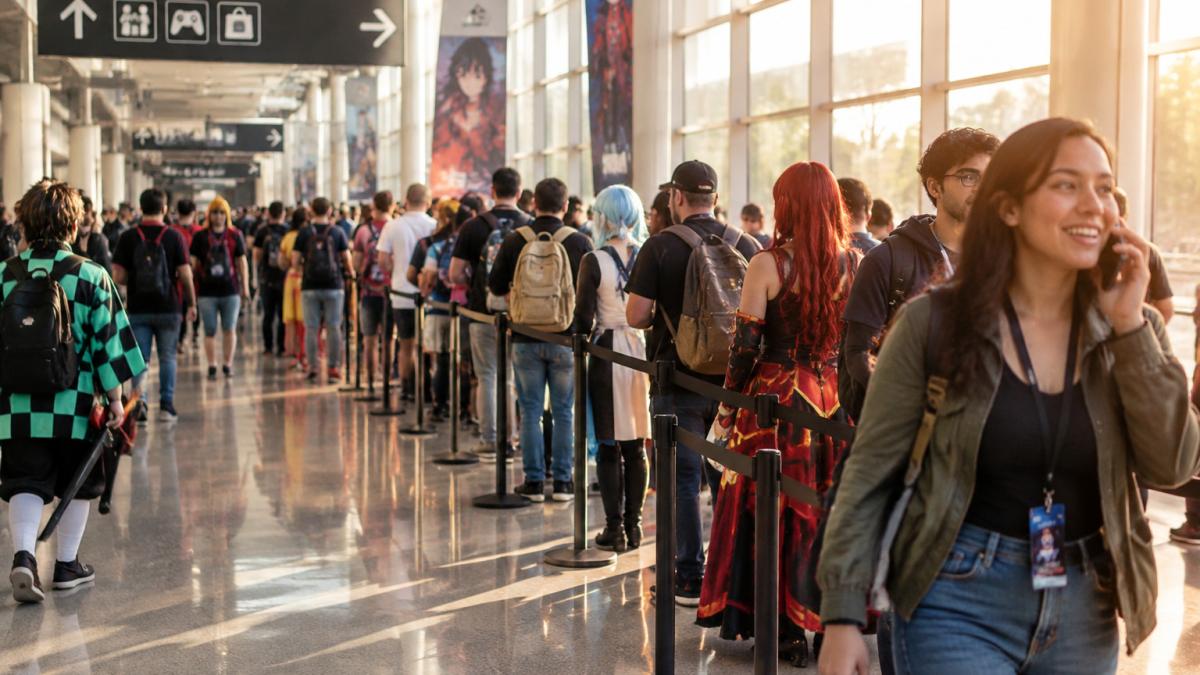
Lines are where large conventions quietly eat your day. A smooth show usually comes down to a set of decision rules you apply before you join a queue. Use the following framework to choose lines and adapt when a panel or signing hits capacity. When a queue is unavoidable, comfortable superhero gear for conventions can make the wait easier to manage without distracting from your next decision.
Decide Before You Join: The Three-Question Test
Before you commit to any line, answer three questions in under a minute:
- What is the hard cutoff? Is this a must-see panel with no encore, or a signing that runs all weekend? If the event repeats or the guest is signing for multiple hours, the line is optional. If it is a one-time panel in a room that clears afterward, the line is mandatory.
- What is the realistic wait? Posted estimates are usually optimistic. A common pattern is that staff quote the time to reach the door, not the time to reach a seat.
- What does waiting cost me? Convert the wait into opportunities. A 45-minute line for a mid-tier guest might cost you an artist alley walkthrough or a smaller panel with no line at all. If the trade is close, skip the line and circle back later.
Queue Mechanics That Actually Work
Most large shows use one of three line types, and each behaves differently:
- Open floor queues (common for exhibitor booths and artist alley): first-come, first-served with no formal hold. These move fast but reward early arrival. If a booth has a posted signing time, arrive 10-15 minutes before it starts rather than camping for an hour.
- Wristband or ticket queues (common for autographs and photo ops): you obtain a timed slot, then return at that time. The trap is assuming the slot is exact. Arrive 10 minutes early and expect the line to move in bursts as staff batch groups through.
- Panel room queues (common for large halls): staff cap the line at room capacity, then cut it off. Once the line is capped, no amount of waiting gets you in. Ask a volunteer where the cap is and whether an overflow room or livestream is available.
Watch out: stepping out of a capped panel line to use the restroom or buy food usually means losing your spot, because staff cannot hold places once the line is at capacity. Use the restroom before you join, and carry water and a snack so you do not need to leave.
When a Panel or Signing Reaches Capacity
Capacity is not the end of your options. Have a fallback ready before you need it:
- Overflow rooms and livestreams. Many large conventions pipe popular panels to a secondary room or stream them in the app. Check the schedule for an overflow listing before you give up.
- Standby lines. Some rooms release no-show seats 10-15 minutes after start. Ask staff whether a standby line exists and where it forms; it is often a separate, shorter line near the door.
- The second session. Guests and panels frequently repeat. If a signing is capped, check whether the guest has another block the next day and prioritize that instead.
Reading the Room and the Hall
Crowd density follows a predictable rhythm. The main aisle in front of the largest exhibitor booths clogs within 30 minutes of opening and stays congested until mid-afternoon. Side corridors and perimeter aisles are usually 5-10 minutes faster end to end.
If a hallway becomes one-way during peak hours, follow the posted flow instead of cutting against it; fighting the current costs more time than the detour.
First Time Comic Con Tips for New Attendees
If this is your first large convention, start with a conservative plan. Choose one day rather than the full run, and leave room for unscheduled exploration.
Expect the unexpected. Lines will be longer than you think, and some events will start late. Staying flexible and letting yourself enjoy the atmosphere of the show is often more rewarding than chasing every item on your list.
Convention Survival Tips: Breaks, Sensory Overload, and Personal Limits
Large conventions can overwhelm the senses with noise, lights, crowds and constant stimulation. Schedule short breaks in quiet spaces or outside the building every two to three hours. Step away from the main floor when you start feeling irritable, dizzy or unable to focus, because pushing through usually makes recovery harder.
Eat regular meals and drink water throughout the day. Blood sugar dips and dehydration can make crowds feel far more draining than they really are.
Accessibility, Safety, and Meet-Up Plans for Large Events
Accessibility and safety are the two areas where advance planning pays off most, and where generic advice fails. Most large conventions publish accessibility services and safety procedures, but the details vary by event. Treat this section as a checklist to complete before you travel, not something to figure out on site.
Accessibility Planning and Accommodations
Start with the convention's accessibility page, usually linked from the main site under a heading like "Accessibility" or "ADA Services." Look for four things:
- Accessible entrances and routes. Large venues often have a dedicated accessible entrance that avoids the main queue. Confirm its location and hours, and map an accessible route from your hotel or parking area to the show floor.
- Seating and viewing areas. Panel rooms typically reserve accessible seating near the front or along an aisle. Ask whether companions can sit with you, since policies differ.
- Quiet rooms and sensory spaces. Many large shows set aside a low-stimulation room for attendees who need a break from noise and crowds. Confirm whether it requires a reservation or is drop-in.
Contact the organizers directly if your needs are not covered on the page. Keep a copy of your confirmation email and the accessibility desk location in your phone.
Watch out: accessible seating and quiet rooms can fill during peak panels. Arrive early for any session where you need reserved seating, and identify a backup quiet space, such as a lobby corner or an outdoor area, in case the dedicated room is full.
Safety, Meet-Up Plans, and Lost-Person Procedures
Large conventions are crowded, loud, and easy to get separated in. Build a plan before you arrive:
- Set a specific meeting point. Choose a landmark outside the main hall, not a booth that may move or a food court that may be packed. Agree on a time to check in, such as every three hours, and a fallback time at the end of the day.
- Create a communication plan. Share your itinerary with someone not attending. Save the convention's security, lost-and-found, and first-aid contacts in your phone before you lose signal in a crowded hall. If cell service is unreliable, agree on text check-ins rather than calls.
- Prepare for a lost person. If a child or group member goes missing, report it to staff or security immediately rather than searching alone. Give staff a recent photo, a description of what the person is wearing, and the last known location. Most large venues have a lost-person procedure and will coordinate a search.
A simple pattern that works for groups: designate one person as the check-in lead, set two meeting times (midday and end of day), and agree that anyone separated goes to the meeting point rather than wandering.
Booking Your Next Fan Event With FANBOYS
Once you know the tips that help you navigate large conventions, the next step is finding the right event. FANBOYS helps you discover conventions and fan events alongside local comic shops, collectible stores and gaming venues, so you can plan your next fandom experience in one place. Browse upcoming fan events and conventions to start building your schedule, or explore comic shops, collectibles and fan events near you to find the venues worth visiting before or after the show.
Get started with FANBOYS and find your next fan event with confidence.
Frequently Asked Questions
How do you prepare for a large fan convention?
Start by downloading the official app and marking the panels, guests, and autograph sessions you care about most. Rank them so you know what to skip if a line runs long. Check the convention map, confirm your ticket type and arrival time, and book lodging or transportation early, since hotels near major convention centers fill up fast. Write a rough daily plan with breaks built in, and keep a backup option for each time block so a missed panel does not derail the whole day.
What should you bring to a fan convention?
Bring a printed or downloaded copy of your tickets, a fully charged phone with a portable battery, comfortable shoes you have already broken in, a refillable water bottle, and snacks that do not need refrigeration. A small bag or backpack that fits under your seat or into a locker is easier to manage than a large tote. Carry cash and a card, since some vendors and food stalls may not accept cards, and keep a copy of your schedule offline in case the app or signal fails.
How do you plan your schedule for a comic convention?
Begin with the must-see items: the guests you want to meet, the panels that matter most, and any autograph or photo sessions with limited spots. Next, check how long each session runs and how far apart the locations are on the map, then leave a buffer of 15 to 30 minutes between events. Mark meal and rest breaks on the schedule as firm commitments. Finally, pick a second choice for every high-priority slot in case the first one sells out or the line is too long.
How can you avoid crowds at a large convention?
You cannot eliminate crowds, but you can reduce the worst of them. Arrive before doors open if your ticket allows it, and head straight to the most popular areas first. Visit the exhibitor hall or artist alley during quieter afternoon periods, and consider attending on a weekday if the convention runs several days. Avoid bunching up at narrow doorways and in lobbies, and keep to the right side of corridors when possible so foot traffic keeps moving.
How do you find your way around a convention center?
Study the floor plan before you arrive and note the main entrances, halls, restrooms, and first aid stations. Use the convention's official app for live updates, since room assignments sometimes change. Identify a landmark near your key areas, such as a large banner or a stage, so you can reorient yourself quickly. Pick a meeting point with your group and set a time, because cell service can be unreliable inside large buildings.
How long should you spend at a fan convention?
For a single-day event, plan to stay for a focused block of four to six hours rather than trying to see everything. For a multi-day convention, pace yourself by limiting high-intensity days to a few hours of scheduled activity and leaving time for rest. Many attendees find that a full day of panels and lines is the most they can handle before fatigue sets in. Build a rest day into longer events if you can, especially if you are traveling.
What should first-time convention attendees know?
First-time attendees should expect longer lines than they anticipate, more walking than they plan for, and sensory input that can feel overwhelming. Set realistic expectations: you will not get to every panel or booth. Learn the basic rules, such as photography policies, autograph etiquette, and where cosplay is permitted. Plan one or two things you truly want to do and let the rest of the day be flexible, so the experience feels enjoyable rather than rushed.
How do you stay comfortable during a long convention day?
Wear shoes you have already walked in for hours, and dress in layers since convention spaces can be cold in some areas and hot in others. Drink water throughout the day and eat regular meals rather than relying only on quick snacks. Take short sitting breaks every hour or two, step outside or into a quieter area when you feel overstimulated, and agree on a check-in time with friends so everyone can recharge when needed.