 How-to
How to Find Stores That Sell Rare Comics
Last Updated: November 24, 2026
Quick Summary
Finding stores that sell rare comics works best as a repeatable workflow: build a written want list, call shops ahead with specific questions, use a comic shop locator to narrow the map, then verify condition and edition before you pay. Local comic shops, conventions, online marketplaces, auctions, and estate sales each surface rare comics with different costs and risks.
- Keep your want list to ten to fifteen entries so dealers take it seriously.
- Ask shops whether they can hold a book for 24 hours and their return policy on raw books.
- Confirm store hours by phone before a long drive, since directories go stale.
- Follow up with shops every two to four weeks on your want-list requests.
- Ask each shop what percentage of its inventory is pre-1980 to match your era.
Table of Contents
- Start With a Repeatable Local Search Workflow
- Use a Comic Shop Locator to Narrow the Map
- Where to Buy Rare Comic Books: Shops, Shows, and Online
- How to Evaluate Comic Book Condition Before You Pay
- Use a Comic Book Price Guide to Compare Total Cost
- Match the Store to the Era You Collect
- Build Your Shortlist With FANBOYS
- Frequently Asked Questions
Start With a Repeatable Local Search Workflow
Finding stores that sell rare comics works best as a process, not a lucky afternoon. This guide walks through a practical workflow for tracking down hard-to-find issues in comic shops, at conventions, and through online marketplaces.
Here is the core tension: most collectors search randomly, then wonder why the same three shops keep disappointing them. A repeatable workflow fixes that. It starts with a written want list, moves through targeted calls, and ends with a verified purchase you can feel good about.
A common mistake is walking into a shop and asking vaguely for "rare comics." Staff remember specific requests. They forget broad ones.
Build a Want List Before You Search
A want list is a written record of the specific issues, runs, and variants you are hunting, including title, issue number, publisher, and the grade range you will accept. Without one, you will buy impulsively and miss the books you actually need.
Build it in three columns:
- Exact issue: title, volume, number, and variant cover
- Acceptable grade: a floor, not a wish
- Budget ceiling: what you will actually pay
Keep the list short at first. Ten to fifteen entries is manageable. A dealer who sees a focused list knows you are serious and will often check the back room.
Call Ahead and Ask the Right Questions
A phone call can save a wasted trip, since many shops will check a back-issue bin while you wait. Our guide on how to search comic store inventory explains how to search a store's inventory before you call.
Ask these four questions in order:
- Do you have [title] issue [number] in stock, raw or graded?
- If not, do you expect it through trade-ins or a collection buy?
- Can you hold it for 24 hours?
- What is your return policy on raw books?
That last question matters more than most buyers realize. If you want a deeper walkthrough of the search process itself, our guide on how to find comic shops nearby covers the local search step by step.
Use a Comic Shop Locator to Narrow the Map
A comic shop locator is a directory that lists comic book stores by location, often with store hours, addresses, phone numbers, and specialty notes.
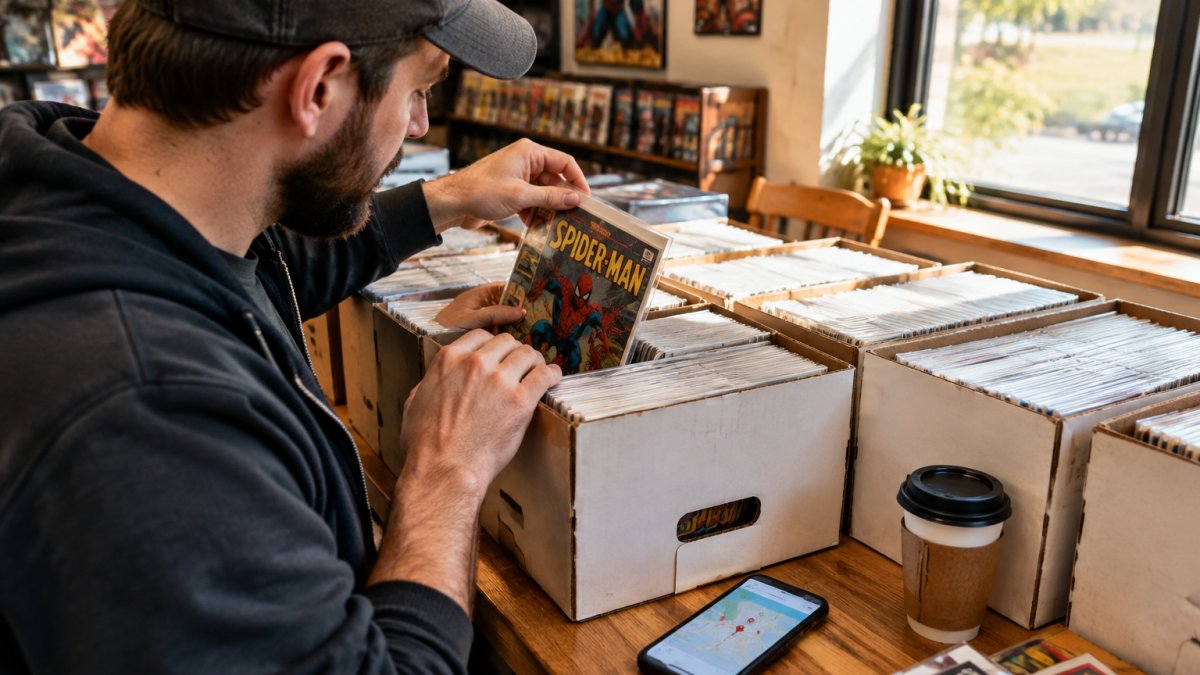
Run the search in five passes:
- ZIP-code directory pass. Search your ZIP code and the two or three adjacent ZIPs you would realistically drive to. Note every shop, collectible store, and gaming venue that carries comics, even ones with vague descriptions.
- Map pass. Drop each candidate into a map search and check the street view, parking situation, and whether the storefront still matches the listing. A shop that moved two years ago will still show up in stale directories.
- Website pass. Open each shop's site and look for a back-issue page, a want-list form, or a "we buy collections" note. Shops that buy collections may have fresh rare inventory cycling through.
- Social pass. Check the shop's social accounts for recent back-issue restock posts, incoming collection announcements, and show schedules. A shop that posts its new arrivals is effectively publishing a free inventory alert.
- Phone pass. Call the two or three shops that survive the first four passes and ask the four questions in the calling section above. This is where the shortlist becomes a route.
Filter by era once the list is short, and ask each shop what it specializes in before you visit.
FANBOYS maintains a directory of comic shops, collectible stores, and gaming venues, so you can browse comic shops and collectible stores near you before you drive anywhere.
Watch out: directories go stale.
Turn the Shortlist Into a Want-List Search
Most locators stop at addresses. The real edge is using the shortlist to run a want-list search, which is the step most buyers skip. Once you have three to five candidate shops, send each one the same written request by email or through the shop's contact form:
- The exact issue, volume, and variant you need
- The grade floor you will accept, raw or slabbed
- Your budget ceiling
- Whether you want to be contacted when a copy arrives
Keep a simple log with the shop name, the date you asked, the staff member you spoke with, and the answer. Follow up every two to four weeks. Some shops keep want lists and check them when a collection comes in, so following up can help. This is the same want-list discipline described earlier, applied across every shop on your map instead of one at a time.
Where to Buy Rare Comic Books: Shops, Shows, and Online
Rare comics can surface through local comic book stores, conventions, online marketplaces and auctions, and private collector networks, each with different costs and risks.
| Source | Best For | Typical Catch |
|---|---|---|
| Local comic shops | Inspecting condition in person | Limited back-issue depth |
| Conventions | Volume and dealer negotiation | Travel and admission costs |
| Online marketplaces | Hard-to-find issues on demand | Shipping and grading disputes |
| Auctions and consignment | High-value keys | Buyer premium and commission |
| Estate sales | Undiscovered collections | Estate sale pricing, no returns |
Local shops remain the best place to evaluate condition with your own eyes. Online listings are convenient but rely on the seller's grading.
Conventions, Estate Sales, and Collector Networks
Conventions pack dozens of dealers into one hall, which makes price comparison easy and negotiation normal. Go early on the first day for the best back-issue selection, and bring cash. Estate sales occasionally surface untouched collections, but you are buying as-is with no returns.
If you are planning around shows, our roundup of comic conventions near you lists upcoming events worth building a weekend around.
How to Evaluate Comic Book Condition Before You Pay
Condition drives most of a comic's market value, so grading skill is the buyer's real edge. But condition is only half the job when the book is rare. Before you pay, you also need to verify that the copy is what it claims to be. Most buying guides cover grading and stop there; the checklist below adds the authenticity and provenance checks that protect a rare-comic purchase.
Read the Book the Way a Dealer Does
Ask to see the book out of the bag under good light, and work through the same points a grader would:
- Spine: check for stress lines, roll, and split staples
- Corners: blunted corners signal handling and lower the grade
- Pages: look for tanning, brittleness, and water stains
- Centering and cover gloss: both affect eye appeal and grade
- Staples and cover attachment: confirm the cover is still firmly attached and the centerfold is present
A dealer who hesitates to remove the book from the bag is worth a second look.
Verify the Edition Before You Trust the Grade
Rare books attract reprints, foreign editions, and facsimiles, and a high grade on the wrong edition is still the wrong book. Confirm the details that identify the printing:
- Cover price and publisher logo match the era you expect
- Indicia inside the front cover lists the correct publisher, volume, and issue
- Ad pages and backup features match known copies of that issue
- Page count is complete, including the centerfold
If you are unsure, compare against a known copy or a reputable price guide entry before you commit. A price guide that lists variants and printings by issue is the fastest cross-check.
Check for Restoration and Trimming
Restoration is the most common way a rare book is made to look better than it is, and it cuts value sharply once discovered. Look for:
- Trimmed edges: page margins that look narrower than a known copy, or a cover that sits flush with the pages
- Color touch: ink or paint that does not match the surrounding print under raking light
- Glued or reinforced tears: stiffness at a tear, or a spine that feels unusually rigid
- Cleaned or pressed books: a suspiciously flat cover with no reading wear on an otherwise old book
Professional grading exists partly to catch these issues. Reputable grading standards from the Certified Collectibles Group explain how professional grading works if you are considering slabbed comics, and a slabbed copy removes much of the restoration guesswork. A slab can confirm a comic’s condition, but checking provenance and comparing copies remains essential when deciding whether a rare issue is worth pursuing, and Comics and Collectibles R Us can help you think through that search.
Ask Provenance Questions Before You Pay
Provenance is the paper trail behind a book, and it matters most on high-value keys. Ask the seller:
- Where did the copy come from, and how long have you had it?
- Is it raw or professionally graded, and if graded, what is the certification number?
- Has it been restored, trimmed, or pressed?
- What is your return policy if a grader disagrees with the grade?
A seller who answers these directly is telling you something about how carefully the book was vetted. A seller who deflects is telling you something too.
For a deeper treatment of judging rare items in shops, our collector's guide to finding rare collectibles goes further into the evaluation process.
Use a Comic Book Price Guide to Compare Total Cost
A comic book price guide is a reference that lists estimated market values by grade, and it is your defense against overpaying. Use it to set a fair market value before you negotiate.
Then compare total purchase cost, not sticker price:
- Local shop: sticker price plus sales tax plus your fuel and time
- Online marketplace: listing price plus shipping plus any return shipping if the grade disappoints
- Auction: hammer price plus buyer premium plus shipping
- Consignment sale: seller commission already baked into the ask
A book that looks cheaper online often is not once shipping and grading risk are added. Reputable grading standards from the Certified Collectibles Group explain how professional grading works if you are considering slabbed comics.
Match the Store to the Era You Collect
Era determines where inventory lives. Golden Age books sit in vaults and specialist dealers. Silver Age keys move through established shops and auctions. Bronze Age and Modern Age back issues fill long boxes in most comic book stores.
Ask each shop one direct question: "What percentage of your inventory is pre-1980?" The answer tells you whether to spend an hour or five minutes there. A shop heavy in Modern Age variants is not the place to hunt a Silver Age key, no matter how good its reviews are.
Build Your Shortlist With FANBOYS
The workflow is simple: write a want list, call ahead, use a locator to narrow the map, verify condition, and compare total cost.
FANBOYS was built for exactly this hunt. FANBOYS helps you discover local fandom destinations and stay informed about upcoming conventions and fan events.
Start your search with FANBOYS and spend less time guessing which shops carry the rare comics on your list.
The rare books are out there, but they reward the collector with a system.
Frequently Asked Questions
How can I find comic shops near me that carry rare issues?
Start with a comic shop locator, then filter by specialty before you drive anywhere. Call each shop and ask two questions: do you carry back issues in the era I collect, and can you hold a specific issue if it comes in? Shops that keep a want list for customers are the ones worth a repeat visit. Confirm store hours and address on the phone, since listings can lag behind a move or closure.
Should I call a comic shop before looking for a specific issue?
Yes, and it saves hours. Staff can check comic book inventory while you are on the phone, tell you the grade of a copy in stock, and quote a price before you make the trip. Ask whether the issue is raw or slabbed, and whether they will hold it for a day.
Are comic conventions a good place to find rare comics?
They are one of the best places to see many dealers in one room, especially for Golden Age, Silver Age, and Bronze Age books that rarely sit in a shop case. Bring a written want list, arrive early on the first day, and compare asking prices across tables before buying. Cash gives you room to negotiate, and a dealer with a booth at a show is usually easier to verify than an anonymous online seller.
How do I check the value and condition of a rare comic before buying?
Use a comic book price guide for a market value range, then judge the copy against it. Check the spine for stress lines, the corners for blunting, the cover for creases and color breaks, and the centerfold for detached pages. Ask whether the book has been pressed or restored, since restoration lowers value. Compare the total cost across a local shop, an online marketplace, and an auction, including shipping, seller fees, and buyer premium.