 Listicle
9 Proven Ways to Discover Gaming Shops Near You
Quick Summary
The best way to discover gaming shops is to combine map searches with a dedicated directory, then cross-check results on local community platforms. Map listings show location and hours, while directories and community groups reveal events and recent player feedback. Call ahead to confirm hours before visiting any gaming shops.
- Search "game store" and "hobby shop" separately, since they surface different results.
- Map listing hours are often outdated, so call ahead before a long trip.
- Check whether a store posts recurring events with specific formats and recent results.
- Visit during a scheduled game night to see whether tables are in use.
- Avoid listings priced far below every other seller for sought-after titles.
Table of Contents
- Why Finding a Good Gaming Shop Takes More Than a Quick Search
- How to Find Local Game Stores Using Maps and Directories
- Searching Online and Local Community Platforms for Gaming Shops
- How to Spot Game Stores With Events and Active Play Communities
- Connecting With Local Tabletop Gaming Groups and Venues
- Where to Find the Best Places to Buy Physical Games
- Your Next Step: Vetting Shops Before You Visit
- Frequently Asked Questions
9 Proven Ways to Discover Gaming Shops Near You
Last Updated: November 9, 2026
Why Finding a Good Gaming Shop Takes More Than a Quick Search
A search for "gaming shops near me" returns a long list, but the list rarely tells you which stores are open, which run events, or which ones carry the games you want. Most people end up visiting two or three shops before finding one that fits. A good shop is usually found through a process, not a single query.
Gaming shops come in several forms: a local game store with a tournament room, a comic and collectibles shop with a board game corner, or an online retailer that ships physical discs and cartridges. Each type serves a different need, so the search should start with what you want to buy and do.
Here is one way to approach it, one step at a time.
How to Find Local Game Stores Using Maps and Directories
Start with a map search, then cross-check the results against a dedicated directory. Map apps show location and hours well, but they rarely indicate whether a store hosts events or carries a specific genre.
- Search "game store" and "hobby shop" separately, since they surface different results.
- Open each listing and check the recent reviews for mentions of staff and selection.
- Note any store that lists events or game nights.
- Compare the results with a comic and collectibles directory that covers gaming venues alongside comic shops.
Watch out: Hours on map listings are often outdated. Call ahead before making a long trip.
Searching Online and Local Community Platforms for Gaming Shops
Online searches can reveal shops that map apps miss, especially small independent stores. Try queries that combine the game type with your city, such as "Magic: The Gathering store" or "Warhammer shop," and scan the results for local retailers.
Community platforms are equally useful. Local subreddits, Discord servers, and Facebook groups can surface recommendations from people who visit shops regularly. Look for threads from the past year, since older posts may describe stores that have closed or changed hands.
How to Spot Game Stores With Events and Active Play Communities
An event calendar proves a store intends to run events; it does not prove anyone shows up. Verify the community in three passes before you commit an evening to a shop.

Pass 1: Read the calendar for cadence, not existence. A healthy store posts recurring weekly or biweekly events with specific formats, a Friday night Magic: The Gathering draft, a Saturday Warhammer league, a monthly board game open table. A calendar with one event three months ago, or events with no format listed, is a warning sign. Check whether the store posts results or photos after events; a shop that recaps its tournaments is usually one where they actually fire.
Pass 2: Cross-check the community off-site. Search the store's name on local subreddits, Discord servers, and Facebook groups. Look for recent posts from people who attended, not just the store's own promotional posts. Ask a direct question in a local group, "Does anyone play at [store] on weekends?", and weigh whether the replies describe a regular crowd or a ghost town. To check whether advertised events actually happen, use this verification checklist for cancelled fan events.
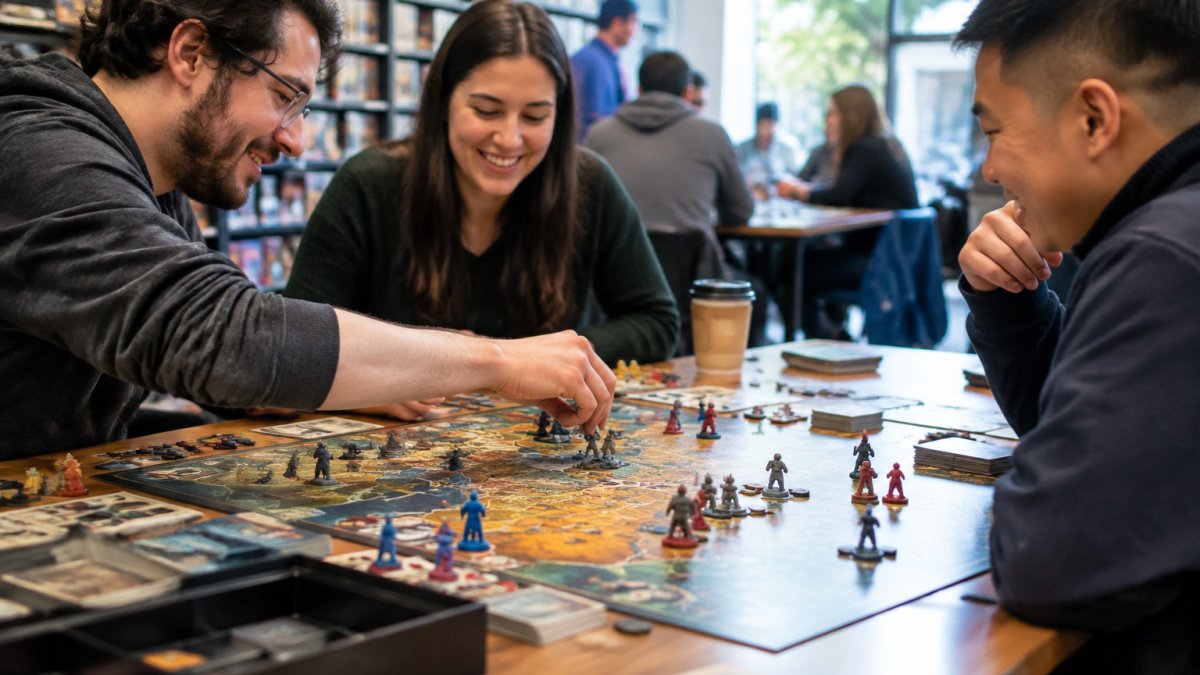
Pass 3: Visit during an event, not on a quiet afternoon. Walk in on a scheduled game night and observe: are tables in use, are staff greeting regulars by name, is there a sign-up sheet or a bulletin board for pickup games? A store with tables set up but empty on a scheduled night is telling you something.
Fit matters as much as activity. A thriving competitive scene can be unwelcoming to a beginner, and a casual board game night can be dull for a tournament player. Before your first session, ask staff three questions: What is the typical experience level? Is there a beginner-friendly night or a teaching table? How are pickup games organized? The answers tell you whether the community matches how you want to play.
Accessibility and inclusion checks. If you need step-free access, ask about the entrance, restroom, and table height before visiting, older storefronts often have a step at the door. If you are looking for a welcoming space, ask whether the store has a posted code of conduct and how it handles disputes. Beginner-friendly events, women's or LGBTQ+ game nights, and family-friendly hours are worth asking about directly.
Watch out: A store can have a packed calendar and still be a poor fit, verify the crowd's experience level and the store's conduct policies before you invest in a league or a campaign.
Connecting With Local Tabletop Gaming Groups and Venues
Finding a group is often easier through the shop than through a stranger's listing. Ask staff whether any regular groups meet on the premises, and whether they have a bulletin board or sign-up sheet for new players.
Beyond the shop, check meetup platforms and convention listings for tabletop sessions. Many groups post open invitations to new players, particularly for games like Dungeons & Dragons and card games. Introduce yourself at a first session, and ask about the group's usual schedule before committing. For practical advice on making those connections, read how to connect with local gamers.
Where to Find the Best Places to Buy Physical Games
Physical games move through several main channels, and each one has a different risk profile. Match the channel to what you are buying rather than defaulting to the cheapest listing.
New releases at local shops. You pay close to list price, but you can inspect the case and disc before leaving, ask about return windows, and sometimes get a launch-day event. Ask the staff how they handle defective discs, a shop that swaps a bad disc on the spot is worth the premium.
New releases at big-box retailers and online stores. Wider inventory and frequent price cuts on new titles, but you are buying sight-unseen. Confirm the seller is the retailer itself and not a third-party marketplace seller riding on the listing.
Used games at local shops. The advantage is hands-on inspection and a human return policy. Before paying, check the disc underside for deep radial scratches (light surface scuffs usually play fine), confirm the case has the correct insert and manual if that matters to you, and ask whether the shop tests trade-ins before reselling. Cartridge-based games should be checked for label damage and bent pins.
Resale shops, flea markets, and garage sales. Best for older and out-of-print titles at low prices, worst for recourse. Assume no returns. Bring a way to test if the seller allows it, and treat "untested" as "probably broken" when setting your price.
Online marketplaces and auction sites. The deepest catalog and the highest fraud risk. A few habits cut most of it:
- Check seller feedback over the last 12 months, not lifetime totals, and read the negative reviews for patterns.
- Prefer listings with clear photos of the actual disc or cartridge, not stock images.
- Pay through the platform's protected payment method so you have a dispute path; avoid off-platform payment requests.
- Ask the seller to confirm the region code and whether the item is a legitimate retail copy, since counterfeit cartridges and burned discs are common in popular retro titles.
- Read the return policy before buying. A seller who accepts returns is signaling confidence in the item's condition.
Watch out: A price far below every other listing for a sought-after title is usually a counterfeit, a region-mismatched copy, or a listing that will never ship, verify the seller before you treat it as a deal.
A practical split many buyers use: buy new releases wherever the price is lowest and the seller is verifiable, buy used locally when condition matters and you want a return path, and buy online only from sellers with recent positive feedback and platform payment protection.
The article compares the main channels for buying physical games, so a quick reference helps match each channel to what you are buying.
| Channel | Best for | Key risk or tip |
|---|---|---|
| New releases at local shops | Inspecting before buying | Close to list price; ask how defective discs are handled |
| New releases at big-box or online stores | Wider inventory and price cuts | Confirm the seller is the retailer, not a third party |
| Used games at local shops | Hands-on inspection and returns | Check disc underside for deep radial scratches |
| Resale shops, flea markets, garage sales | Older or out-of-print titles | Assume no returns; treat untested as likely broken |
| Online marketplaces and auction sites | Deepest catalog | Highest fraud risk; use protected payment and check feedback |
Your Next Step: Vetting Shops Before You Visit
Before you visit a shop, run a short check. Confirm the hours, look at recent reviews, and read the event calendar. If the shop has a website, check whether its inventory matches what you are looking for.
Use a simple checklist: Is the shop open at the times you can visit? Does it carry your game system or genre? Are the events recent? Does staff respond to questions online? A shop that passes all four is worth a trip.
Start with the FANBOYS directory to compare comic shops, collectible stores, and gaming venues near you, then visit your top two or three picks this month.
Frequently Asked Questions
What are the best ways to find gaming shops near me?
Start with a map search for gaming and hobby stores, then check each shop's website or social media for current hours and event listings. Community platforms like Reddit local gaming threads and Facebook groups often surface independent stores that do not rank well in map results. Check FANBOYS for listings of local comic shops, collectible stores and gaming venues in your area. Calling ahead before a first visit confirms the shop is still open and whether it carries the product types you want.
How can I find a local game store that hosts gaming events?
Look for an event calendar on the store's website or social accounts, since most stores post weekly game nights, tournaments and release-day events there. Searching the store name with terms like events, tournament or game night usually turns up recent posts. Ask staff directly whether they run regular events and what days they fill up. A store with a consistent schedule over several months is a better bet than one with a single old announcement.
Where can I find local tabletop gaming groups?
Check the events boards and community bulletins at local game stores, since many groups recruit there. Meetup.com, Discord servers for your city and Facebook groups focused on tabletop gaming are also common places to find recurring sessions. Libraries and hobby cafes sometimes host open play nights. Attend one or two sessions before committing to a group to see whether the tone and schedule fit you.
What should I ask a game store before visiting?
Ask whether they buy and trade used games, what their return policy is and whether they carry the specific system or game lines you play. Check whether they run events and how new players are welcomed. If you want rare or older titles, ask whether they keep a searchable inventory or can check stock by phone. Confirming their current hours and whether they accept walk-ins saves a wasted trip.