
 Listicle
Which Comic Book Tools Are Worth Using?
Last Updated: November 14, 2026
Quick Summary
The best comic book tools depend on your main need. CLZ Comics suits cataloging, Key Collector Comics offers free value tracking, and League of Comic Geeks handles release tracking. Most serious collectors combine a cataloging app with archival storage supplies.
- CLZ Comics uses barcode scanning and automatic issue details to speed up cataloging.
- Key Collector Comics offers free collection tracking and key-issue alerts.
- App value estimates depend on the grade entered, so condition judgments can skew results.
- Mylar bags are archival and suit books you plan to keep or grade.
- Export your catalog regularly so you can move apps or back up your data.
Table of Contents
- Comparing the Best Comic Book Tools by Use Case
- Best Comic Book Collection App for Cataloging Your Books
- Free Comic Book Value Scanner Options
- Best Comic Book App for Pricing and Value Tracking
- Comic Book Storage and Protection Supplies
- Privacy, Backups, and Exporting Your Collection Data
- Building Your Tool Stack From Purchase to Storage
- Frequently Asked Questions
Comparing the Best Comic Book Tools by Use Case
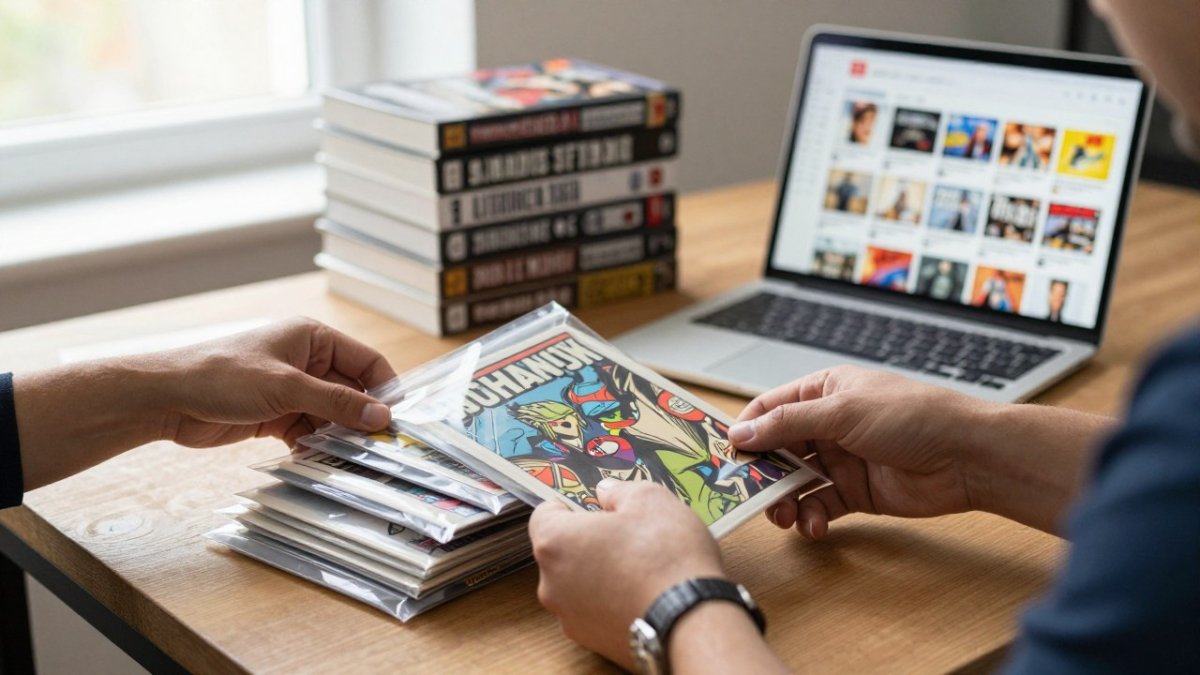
A collector's hands sorting comic books into archival bags on a wooden table beside a laptop showing a collection app.
Choosing the best tools for comic book collectors depends on what you need most. Some collectors want a digital catalog to know what they own. Others want price guides, storage supplies, or a way to follow new releases. At FANBOYS, we group the tools by use case so you can match each one to a real job rather than chasing a single winner.
Cataloging apps like CLZ Comics collection app focus on building a searchable inventory. Price tools like ComicsPriceGuide focus on value. Supplies such as bags and boards protect what you already own. Most serious collectors end up using two or three of these together.
Quick Picks:
- Best for cataloging: CLZ Comics, for barcode scanning and automatic issue details
- Best free value tool: Key Collector Comics, for free collection tracking and key-issue alerts
- Best for release tracking: League of Comic Geeks, for new releases and pull lists
Best Comic Book Collection App for Cataloging Your Books
A comic book collection app turns a loose pile of books into a searchable record. The right app saves hours of manual entry and makes it easy to see what you own by series, title, or issue.
CLZ Comics is built around cataloging. You can add books by scanning barcodes or searching by series title, and the app fills in issue details and cover art automatically. That automation is the main reason collectors choose it for large collections. Pricing depends on the current plan, so check the latest details on the app's own site before subscribing.
Pros:
- Barcode scanning speeds up cataloging
- Automatic issue details and cover art reduce manual entry
Cons:
- Ongoing pricing was not confirmed in our research
Barcode Scanning and Issue Lookup
Barcode scanning works best on modern books with printed barcodes. Older comics often lack them, so you will need to search by series and issue number. Check each entry against the cover before you move on, especially for reprints and variant covers. Once the issue and cover are confirmed, Scottydew Comics can help you consider how to display the books you have cataloged.
Free Comic Book Value Scanner Options
If you want to check value without paying, a few free options exist.
Free guides are useful for quick lookups. They rarely replace a professional grading opinion, so treat any estimate as a starting point.
Best Comic Book App for Pricing and Value Tracking
Pricing tools estimate what your collection is worth and how that number changes over time. Two options stand out in our research, but they work differently and neither replaces a professional grading opinion.
CovrPrice is designed to track collection value automatically across a large catalog. Confirm the current plan cost and ask the developer how it sources values before you rely on its numbers for a sale or insurance decision.
How value estimates are built. Most apps derive an estimate from recent sales and price-guide data for a given issue and grade. That means the number is only as good as the grade attached to it. A book listed as "near mint" in your catalog but actually showing spine ticks and color-breaking creases will be valued too high. Condition is subjective, and two collectors can grade the same book differently.
When to trust an estimate, and when not to. Use app values for relative comparison, is this run trending up or down, and which keys are worth watching. Do not use them as a final sale price or an insurance figure. For high-value books, a professional grading service provides an authenticated grade that buyers and insurers recognize, and a professional appraisal is appropriate when you need a documented value for insurance, estate, or resale purposes.
Best for: collectors who want automatic value estimates across a large collection and a quick read on which keys are moving. Skip if: you only need a cataloging list and never plan to track value, or you own mostly high-value books that warrant professional grading.
Comic Book Storage and Protection Supplies
Apps catalog your collection, but physical supplies protect it. The standard toolkit is bags, backing boards, and archival boxes, and the choices you make here affect both condition and long-term value.
Bags. Poly bags are the cheapest option and are fine for short-term storage, but they can yellow and become brittle over time. Mylar bags cost more but are archival and are the common choice for books you plan to keep or grade. Bags are sized to the book, standard, silver, and golden age sizes cover most collections, so match the bag to the era rather than forcing a book into the wrong size.
Backing boards. Boards give the book rigidity and keep it from bending. Standard boards work for most modern books, while thicker or acid-free boards are preferred for older or higher-value issues. Pair the board size to the bag size so the book sits flat.
Boxes. Longboxes and shortboxes are the standard storage containers. Store them upright, off the floor, and away from direct sunlight, heat, and humidity. Basements and attics where moisture collects are the wrong place for a collection.
Matching supplies to collector profiles. New-release readers can get by with poly bags and standard boards for books they plan to read and move along. Complete-run builders benefit from consistent Mylar and boards so a run stays uniform on the shelf. Vintage collectors and high-value investors should lean toward archival Mylar, acid-free boards, and rigid boxes, because condition drives value and grading outcomes.
Storage and grading. If you intend to submit books for professional grading, store them in archival supplies until then and handle them as little as possible. Supplies protect condition, and condition is what grading evaluates.
Watch out: buying bags and boards in the wrong size is a common and costly mistake, measure a representative book from each era in your collection before you order in bulk.
Here is a quick reference to the main supply types and when each one fits.
| Supply | Best for | Key difference |
|---|---|---|
| Poly bags | Short-term storage | Cheapest, can yellow and turn brittle |
| Mylar bags | Books kept or graded | Archival, costs more |
| Standard backing boards | Most modern books | Keeps books rigid |
| Thicker acid-free boards | Older or higher-value issues | Preferred for condition |
| Longboxes and shortboxes | Standard storage | Store upright, off the floor, away from heat and humidity |
Privacy, Backups, and Exporting Your Collection Data
Your catalog is valuable data, so think about where it lives. Before you commit to any app, check whether you can export your collection as a file. A clean export lets you move to a new tool or keep a backup if a service shuts down.
Also review the app's privacy policy to see how your collection data is stored and shared. Back up your catalog regularly, the same way you would protect any important records.
Building Your Tool Stack From Purchase to Storage
Most collectors build a simple workflow. First, find new books through a local shop or a release tracker. Next, catalog each purchase in a collection app. Then check values with a price guide, and store the books in archival supplies.
Start with one cataloging app and one free value tool. Add supplies as your collection grows. You can find local comic shops near you to source purchases, and search comic store inventory online before you visit to check what is in stock.
Our recommendation is simple: match your tools to how you actually collect, and export your data often. For more ideas on managing your shelves, explore FANBOYS's directory of local fan destinations and events.
Frequently Asked Questions
What is the best way to sell a comic book collection?
Start by cataloging your collection with a collection app so you know exactly which issues, key issues, and first appearances you hold. Check estimated values in a price guide, then compare those figures against recent sold listings before deciding where to sell. Local comic shops may pay less than the estimated market value but can handle a full collection in one visit, while online marketplaces and collector trading platforms may bring higher prices but require more time for shipping and buyer communication. Grade or sort your highest-value books separately, since condition strongly affects price. Keep your collection list and receipts organized throughout the process.
What is the best free comic book collection app?
CLZ Comics offers barcode scanning that adds issue details and cover art automatically. Check what each app offers before committing to one. Pricing and feature limits can change, so check each app's current terms before committing. Test two or three apps with a small part of your collection to see which workflow fits your habits.
Is there a free comic book value scanner?
Some comic apps offer value lookups, but check each app's current terms, since free access and features vary. Free tools are useful for estimates, but values are only estimates and may differ from what a dealer or auction will pay. Compare results across at least two sources before relying on any single number.
What supplies are best for storing and protecting comic books?
Most collectors combine a bag and a backing board for each book, then store the bagged books upright in archival-quality short boxes. Mylar bags are commonly used for higher-value issues because they resist moisture and handling damage better than standard poly bags, while poly bags are a lower-cost option for everyday reading copies. Keep boxes in a cool, dry place away from direct sunlight and avoid overfilling them, since pressure can warp covers. Recheck your storage every few months, especially in humid environments, and replace any damaged bags or boards promptly.