
 how-to
7 Steps to Find Active Tabletop Gaming Groups
Quick Summary
To find active tabletop gaming groups, first define your game type, experience level, and play style, then search local game stores, libraries, and community centers. Check online listings, forums, and Discord for recurring events, and verify that a group is still active before you commit.
- Narrow your search by game type, experience level, and play style before looking.
- Check game stores, comic shops, libraries, and community centers for open tables and schedules.
- A group with no activity in 60 or more days is likely dormant.
- Ask a specific question and expect a reply within two to four days from an organized group.
- Choose a public venue for your first session and tell someone where you will be.
Table of Contents
- How to Find Active Tabletop Gaming Groups in 5 Steps
- How to Find Tabletop RPG Groups Online and Nearby
- Using Online Directories, Forums, and Discord to Find Active Players
- How to Verify a Group Is Active Before You Commit
- How to Find a Board Game Group and Make a Good First Impression
- Start Your Search This Week With FANBOYS
- Frequently Asked Questions
How to Find Active Tabletop Gaming Groups in 5 Steps
Last Updated: November 5, 2026
Looking for people to play tabletop games with? Finding an active tabletop gaming group near you is easier when you know where to look. At FANBOYS, we help gamers connect with local comic shops, game stores, and community venues, so you can find your table faster.
Most players don't need a perfect group. They need a regular game, a friendly crowd, and a schedule that works. A few simple steps can get you there.
A tabletop gaming groups is a recurring gathering of players who meet to play board games, card games, or roleplaying games. Active groups meet on a regular schedule and keep the same core players over time.
The plan below is short and practical. Start with your own tastes, then search where local players already gather.
Step 1: Define Your Game Type, Experience Level, and Play Style
Start by deciding what you want to play. A group that plays heavy strategy games is different from one that runs Dungeons & Dragons campaigns.
Write down three things:
- Game type: board games, card games, or roleplaying games
- Experience level: new, intermediate, or veteran
- Play style: casual game nights, long campaigns, or competitive play
A common mistake is searching for "any group." Narrow searches get better results. A specific request like "beginner D&D group on weeknights" is far easier to match.
Step 2: Search Local Stores, Libraries, and Community Centers
Local gathering spots are often the fastest way to find players. Many game stores run open tables or weekly events.
Check these places first:
- Game and hobby stores with play space
- Comic shops that host game nights
- Public libraries with board game programs
- Community centers and recreation departments
You can find nearby venues on the FANBOYS directory of comic shops, collectible stores, gaming venues, and fan events. Ask staff whether any groups meet regularly and whether they post schedules.
How to Find Tabletop RPG Groups Online and Nearby
Roleplaying games need steady tabletop gaming groups more than other formats. A campaign only works when the same players show up week after week.
Start with a search for local RPG communities. Then check online spaces where game masters post open seats. Many groups announce recruiting in one place and then move to a private chat.
For a deeper walkthrough, read our practical guide to connecting with local gamers.
Useful search terms include:
- "[your city] D&D group"
- "[your city] RPG meetup"
- "[your city] tabletop roleplaying"
- "looking for players [your city]"
When you find a post, look for details. Good listings name the system, the schedule, the experience level, and the expected time commitment.
Using Online Directories, Forums, and Discord to Find Active Players
Online spaces help you reach more players. They are also where most groups recruit today.
Try these options:
- Meetup-style event listings for recurring game nights
- Local social media groups for neighborhood gaming chatter
- Discussion forums for regional tabletop communities
- Discord servers for scheduled online and in-person games
Discord is useful because many servers organize both online and local meetups. Join a few servers, read the rules, and introduce yourself in the proper channel.
Browse upcoming gatherings on the FANBOYS fan events and gatherings page.
How to Verify a Group Is Active Before You Commit
A listing can be months stale and still look healthy. Verification is a short, repeatable check you run before you block out an evening, and it is the step most players skip. Treat it as a three-part test: recency, rhythm, and responsiveness.
1. Check recency against a fixed window. Open the group's most recent activity and compare it to today's date. A common pattern among active organizers is at least one public update, event posting, or check-in within the past 30 days.
2. Confirm a rhythm, not a one-off. Active groups repeat.
3. Read the attendance trail. Check whether past events show attendee counts, photos, or recap posts. A group that consistently lists 6-12 attendees across several sessions is healthier than one with a single 40-person launch event and nothing since.
**4.
5. Cross-check two sources. Confirm the group on a second channel before you commit. A store calendar, a Discord announcement channel, and a social media post should roughly agree on the next date. When they conflict, trust the most recently updated source and ask the organizer to confirm.
Watch out: a group that advertises a new game every week but never names a date, venue, or system is usually a placeholder page, not an active table. Ask for a specific time and location before you plan around it.
A quick scorecard helps you decide: recent activity within 30 days, a stated recurring schedule, visible past attendance, and a reply to a specific question. Three or four checks passing means it is worth showing up. One or none means keep searching.
The article lays out five checks to confirm a group is still active before you commit.
| Check | What to look for | Red flag |
|---|---|---|
| Recency | Activity within the past 30 days | No update in 60+ days |
| Rhythm | A stated recurring schedule | Only a single one-off event |
| Attendance | Past events with 6-12 attendees | One launch event, then silence |
| Reply | Answer to a specific question in 2-4 days | No reply after one follow-up |
| Cross-check | Two sources agree on the next date | Sources conflict on the date |
How to Find a Board Game Group and Make a Good First Impression
Board game groups vary more than RPG tables, so finding the right tabletop gaming groups matters as much as discovering them. Before you attend, match the group on three axes: game weight, session length, and competitiveness.
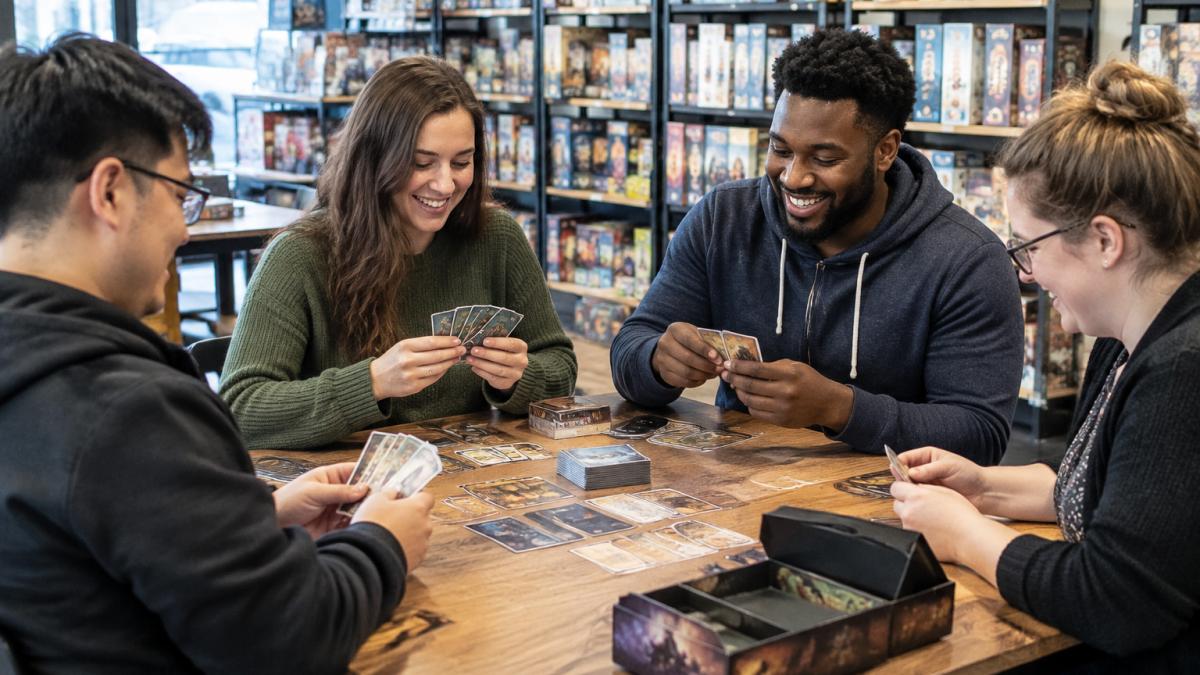
Match on game weight. Light party games and fillers play in 15-45 minutes and reward social energy. Mid-weight strategy games often run 60-120 minutes and expect some rules reading. Heavy strategy and eurogames can run two to four hours and usually assume players will learn before the table.
Match on session length and schedule. A weeknight group that starts at 6:30 p.m. and wraps by 9 p.m. is a different commitment from a weekend group that plays one long game.
Match on competitiveness. Some tables are cooperative and casual; others track wins and play to optimize. Ask directly: "Is this a casual table or are people playing to win?" Neither answer is wrong, but the mismatch is what makes a first night uncomfortable.
Make a strong first impression with specifics. Arrive a few minutes early, introduce yourself to the organizer, and ask what the group likes to play before suggesting a game.
Handle the first meeting safely. Choose a public venue for a first session, such as a game store, library, or café. Tell someone where you are going and when you expect to be back.
Respect accessibility and expectations. Ask ahead about stairs, noise level, table space, and whether the venue serves food, since these details are rarely in listings. Confirm whether the group expects players to bring games, pay a table fee, or chip in for the room.
Watch out: joining a long campaign-style board game group as a drop-in rarely works. If the group is mid-campaign, ask whether they run a separate open night for new players.
Start Your Search This Week With FANBOYS
Finding an active tabletop gaming group takes a little planning. Define what you want, search local venues, and check online communities. Then verify activity before you show up.
FANBOYS makes that search easier by pointing you toward local comic shops, collectible stores, gaming venues, and fan events in one place. Explore the FANBOYS directory to find your next table and start playing with local gamers.
Frequently Asked Questions
How can I find tabletop RPG groups?
Start with local game stores, which often post recruitment boards or run organized play nights for roleplaying games. Libraries and community centers are also worth checking, since many host recurring game nights. Online, look at regional Discord servers, subreddit communities, and event listings that show recurring sessions rather than one-time events. When you contact a group, mention your experience level, preferred game system, and availability so the organizer can tell quickly whether you fit.
How can I tell whether a tabletop gaming group is active?
Look for recent activity: a post or event within the last few weeks, a schedule with a regular day and time, and replies from organizers to newer members. A group that lists sessions months apart, or whose last message is old, is probably inactive. Before committing, send a short message asking when the next session is and whether there is an open seat. A prompt, specific reply is a good sign; silence after two or three attempts usually means the group has stalled.
What should I say when asking to join a gaming group?
Keep it short and specific. Introduce yourself, name the games you play and your experience with them, state when you are available, and ask whether there is room for a new player. For example: "Hi, I've played Dungeons & Dragons for about three years and I'm free on Thursday evenings. Do you have a seat open for a new player?" Mention that you are happy to attend a trial session first. This gives the organizer what they need to respond without a long back-and-forth.
Where do people find D&D groups?
Many D&D players find groups through local game stores, public library game nights, and online communities organized by region. Regional Discord servers and social media groups often post open tables and one-shot adventures. Convention listings and organized play programs are another good source because they draw experienced players. If you cannot find an existing group, consider posting your own recruitment message with your schedule, preferred edition, and table expectations.