 how-to
How to Find Updated Comic Book Release Dates
Last Updated: November 3, 2026
Quick Summary
To find updated comic book release dates, check publisher solicitation pages first, then confirm with your local shop's order system. Treat every date as a working estimate until you verify it close to release day, since listings often disagree.
- Publisher solicitation and release pages are the official first source for a confirmed or moved date.
- Your shop's distributor order screen often shows the most current arrival date in the final week.
- Cover dates are labels, not street dates, so never use them to settle a conflict.
- Recheck each date 48 to 72 hours before release, when most late changes appear.
- Track print, digital, and collected editions as separate rows because their dates rarely match.
Table of Contents
- Why Comic Book Release Dates Change
- Where to Find Reliable Comic Book Release Calendars
- How to Check This Week's New Comics
- How to Verify a Date When Listings Disagree
- Print, Digital, and Collected Edition Date Differences
- Building a Pull List That Stays Current
- Setting Up a Release Date Tracker for Your Watchlist
- Frequently Asked Questions
Comic book release dates shift more often than most readers expect. A title promised for a Wednesday can slip a week, and a collected edition may land months after the single issues it reprints. If you want to know what's coming and when, you need a method for checking dates, not just a single calendar. This guide from FANBOYS walks through where to look, how to check a date when sources disagree, and how to keep a watchlist that stays accurate.
Why Comic Book Release Dates Change
Release dates move for ordinary reasons. Printers run behind, distributors reshuffle shipments, and creative teams ask for an extra week to finish art. A publisher may also move a title to fit a crossover event or to avoid a clash with a bigger release.
For you, the practical result is simple. A date you saw six weeks ago may no longer be correct. Treat every date as a working estimate until you confirm it close to release day.
Common reasons a date changes include:
- Art delays: The artist needs more time, which pushes the whole schedule back.
- Printing and shipping problems: Paper shortages or freight delays hold issues at the printer.
- Event tie-ins: Publishers move issues so they ship alongside a larger storyline.
- Format changes: A print issue may ship later than its digital counterpart, or the reverse.
Where to Find Reliable Comic Book Release Calendars
Start with sources that show their dates clearly and update them often. Good release calendars list the title, issue number, publisher, and on-sale date in one place. Many also show the cover image so you can match the listing to the book you want.
Publisher websites are often the most direct source. Major publishers post their upcoming solicitations and release schedules, and these tend to be the first place a date is confirmed. Comic shop websites and their newsletters are also useful, since shops order directly from distributors and know when stock arrives.
Community forums and fan sites can help you spot changes early, but treat them as a second check. Confirm anything important against a publisher or shop listing before you plan around it.
How to Check This Week's New Comics
Most comics go on sale on the same weekday, which is why many shops celebrate New Comic Book Day on Wednesdays. To see what's out this week, follow a simple routine.

- Open a release calendar and filter for this week's date.
- Scan the list by publisher to see what each one is putting out.
- Note the issue numbers for any series you already follow.
- Call or check the website of your local shop to confirm stock.
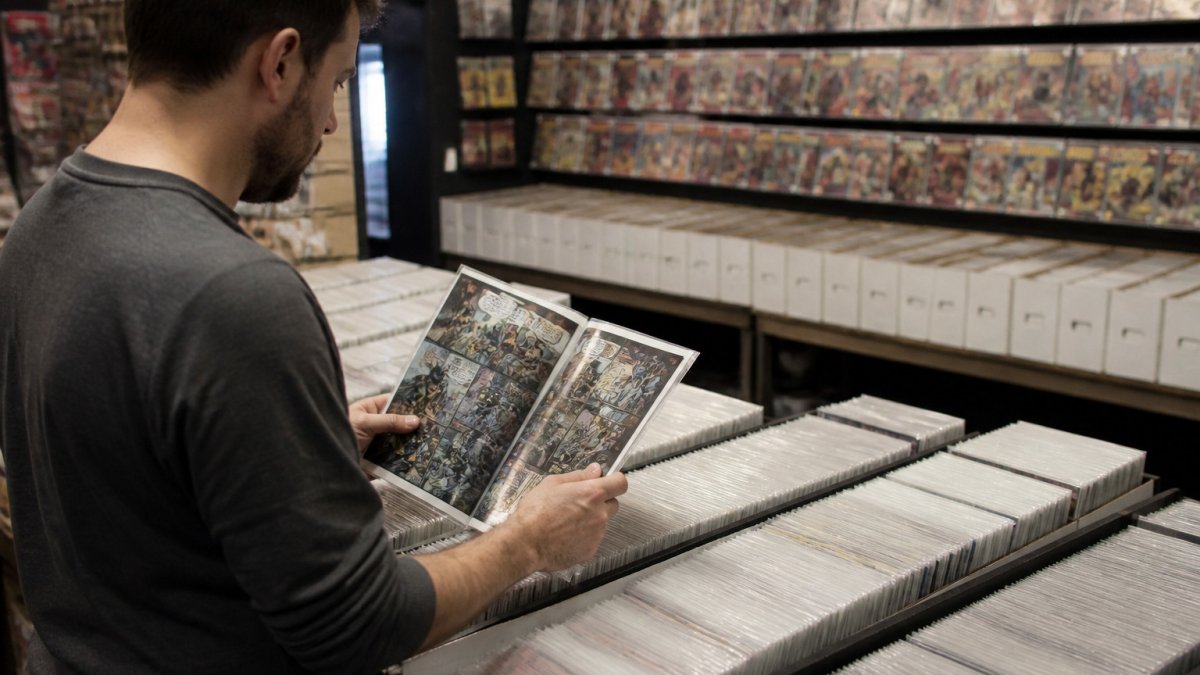
A collector flipping through new issues at a local shop is often the fastest way to see the week's releases in person. Many shops will also hold books for you if you ask ahead of time.
How to Verify a Date When Listings Disagree
Conflicting dates are normal, not a sign that a source is broken. Publisher solicitations, distributor catalogs, retailer websites, and community calendars update on different clocks, so the same issue can show three different Wednesdays in the same week. The fix is a source hierarchy plus a short verification workflow you run whenever a date matters.
Build a source hierarchy
Rank sources by how close they sit to the actual ship decision, not by how easy they are to read.
- Publisher solicitation and release pages. These reflect the publisher's own schedule and are the first place a date is officially confirmed or moved. Check the solicitation text and any "street date" or "on sale" field, not the cover date.
- Distributor and retailer order systems. Your local shop orders through a distributor, and the shop's point-of-sale or order screen usually shows the arrival date the distributor has committed to. This is often more current than a publisher page for the final week before release.
- Retailer websites and newsletters. Useful for preorder cutoffs and stock status, but their listed dates lag publisher changes more often.
- Community forums, fan wikis, and social accounts. Fast for early rumors of a slip, but treat every claim as unverified until a higher source agrees.
Run the verification workflow
When two listings disagree, work top-down and stop as soon as two independent sources agree.
- Open the publisher's listing for that exact issue number. Confirm the series title, issue number, and format match, similar titles and reprints are a common source of false conflicts.
- Check your shop's order screen or ask the counter. If the distributor has the book on a manifest, the shop can usually see the committed arrival date.
- Compare the two. If the publisher and the shop agree, treat that date as current. If they conflict, the shop's date usually wins for the final week because distributor manifests update later than publisher web pages.
- Recheck 48 to 72 hours before the date. Most late changes land in that window, after final shipping confirmations.
Watch out: A cover date is a label, not a street date. A book marked "July" can reach shelves in June, and a book marked with a month can ship in the final week of the prior month. Never use the cover date to settle a conflict.
Tell a delay apart from a cancellation
A moved date and a cancelled book look similar on a stale calendar, so check three signals before you assume a delay.
- A new date exists somewhere. If the publisher page or the shop's order screen shows a future date, it is a delay, not a cancellation.
- The solicitation is still active. Cancelled issues usually disappear from solicitations or get a cancellation notice; a slipped issue keeps its listing with a revised date.
- The issue number is unchanged. A renumbered or relaunched series is a different situation from a delayed issue, and the old date may never return.
If no source shows a future date and the listing has gone inactive, treat it as cancelled until the publisher says otherwise. Record the last confirmed date and the source you checked so you can spot a reversal later.
When sources conflict, rank them by how close they are to the actual ship decision and check them in this order.
| Source | Why it matters | Trust level |
|---|---|---|
| Publisher solicitation and release pages | Official schedule; first place a date is confirmed or moved | Highest for the official date |
| Distributor and retailer order systems | Shows the committed arrival date, often more current in the final week | Highest in the final week before release |
| Retailer websites and newsletters | Useful for preorder cutoffs and stock status | Medium; often lags publisher changes |
| Forums, fan wikis, and social accounts | Fast for early rumors of a slip | Low until a higher source confirms |
Print, Digital, and Collected Edition Date Differences
One comic can have several release dates. The print single issue, the digital version, and the later collected edition, such as a trade paperback or hardcover, usually ship on different schedules.
Digital releases often come out on the same day as print or within a few days of it. Collected editions usually arrive months or even years after the single issues, because the publisher waits until a full story arc is complete. If you want a specific format, check its date on its own rather than assuming it matches the single issues.
Keep the formats separate in your notes. A digital issue on your watchlist and a print issue on your watchlist can have very different ship dates.
Building a Pull List That Stays Current
A pull list lets your shop set aside issues for you each week. It works best when the list is accurate and the shop knows exactly what you want.
Make your pull list reliable by following these steps:
- Add each title with its exact series name and publisher. Similar titles can be easy to confuse.
- Note the issue number you are on. This avoids missing a book or getting a duplicate.
- Review the list every few months. Remove series that have ended and add new ones you want to follow.
- Confirm changes with your shop. Ask whether the shop can hold a title if its date slips.
A pull list is only as good as its details. Clear series names and correct issue numbers will save you the most trouble.
Setting Up a Release Date Tracker for Your Watchlist
A tracker is only useful if it tells you what changed and when to act. The goal is a single record that combines your pull list, your alerts, and a revision log so a moved date becomes a task instead of a surprise. You can build this in a spreadsheet, a notes app, or a calendar with reminders; the structure matters more than the tool.
Use these fields for every title
A workable tracker needs enough detail to catch conflicts and duplicates.
- Series title and publisher. Use the exact solicited name; similar titles are the most common cause of a missed or duplicated book.
- Issue number and format. Track print, digital, and collected editions as separate rows, because their dates rarely match.
- Current on-sale date and the source you used. Write the source next to the date so you know which one to recheck.
- Previous date and the date you found the change. This revision log shows how often a title moves and whether a pattern is forming.
- Status. Mark each row as scheduled, delayed, cancelled, or shipped so a stale date does not sit in your list looking active.
- Alert date. Set it one to two weeks before the on-sale date, when most changes surface.
Set a recheck cadence that matches how dates move
Most practitioners find that dates change in two clusters: several weeks out, when publishers adjust solicitations, and in the final 48 to 72 hours, when shipping is confirmed. Build your routine around those windows.
- Weekly: scan this week's releases against your tracker and mark anything that shipped.
- One to two weeks before a date: recheck the publisher listing and your shop's order screen, then update the row and log any change.
- 48 to 72 hours before a date: do a final check, since late slips land in this window.
- Monthly: review the whole tracker, remove finished series, and add new titles you want to follow.
Wire up alerts without relying on one source
Alerts work best when they come from more than one place. Use your shop's pull-list or hold notifications, any publisher newsletter or release-calendar alert you already receive, and a calendar reminder tied to each row's alert date. If a title is important, set the calendar reminder as a backup even when a shop alert exists, because shop systems and publisher pages update on different schedules.
Watch out: An alert that fires only on the original date will miss a delay entirely. Tie reminders to the recheck windows above, not just to the on-sale date, so a moved book still triggers a check.
Keep the tracker honest
A tracker drifts when rows are added but never closed. Mark shipped and cancelled rows promptly, keep the revision log instead of overwriting old dates, and note the source for every change. That record is what lets you tell a one-week slip from a book that has moved three times, and it is the difference between a list that looks current and one that actually is.
Frequently Asked Questions
Where can I find a list of new comics coming out this week?
Most comic book publishers and major comic shops post weekly release lists, usually organized by publication date. Check the publisher's own news page, a comic shop's weekly new arrivals listing, or a dedicated release calendar. Because dates can shift, compare at least two sources before planning a shop visit. Your local comic shop can also confirm what is arriving in its next order, which is often the most reliable check for in-store availability.
Why do comic book release dates change?
Release dates move for several reasons: printing delays at the printer, shipping problems, creative changes that push a title back, or distributor scheduling. A date listed months ahead is usually a target, not a guarantee. Watch for updates in the weeks before release, since publishers and distributors typically confirm final dates closer to the on-sale date.
What is the best way to track comic book release dates?
Combine a release calendar with a tracker that lets you save specific titles and receive alerts when dates change. Set up notifications for the series you follow, and check the publisher's listing again about a week before the on-sale date. Keep a short note of the date source you used, so you can see which source was accurate when dates conflict.
How can I make a weekly comic book pull list?
A pull list is a list of titles you want your comic shop to set aside for you each week. Start by listing the series you already read, then add new titles after checking their issue numbers and publishers. Review the list every few weeks, removing series that have ended and adding new launches. Give your shop the list in advance so the staff can reserve your copies before the release week.
Checking comic book release dates takes a little routine, but it pays off. Use a trusted calendar, confirm dates before you plan around them, and keep your pull list and tracker current. FANBOYS helps you find nearby comic shops and fan events, so you can pick up new issues in person. Visit FANBOYS to start finding the comic shops and collectible stores near you.